
A few weeks ago I wrote about how trying to balance managing and directing with friendship can be a tight-rope walking act.
In this post I wanted to talk about something that is seldom discussed by people on the hiring end of the equation, i.e. from the perspective of a producer/director/DPs etc, I wanted to highlight how certain personality traits can very often trump talent when a crew is assembled.
Simply put: Talent and/or skill are extremely important in any field, and notably in the film and photography world, but it is but one of many important variables that most manager take into account during their hiring process. Below are a few key examples I’d like to share, the majority of which I learned from personal experience and more often than not: the hard way.
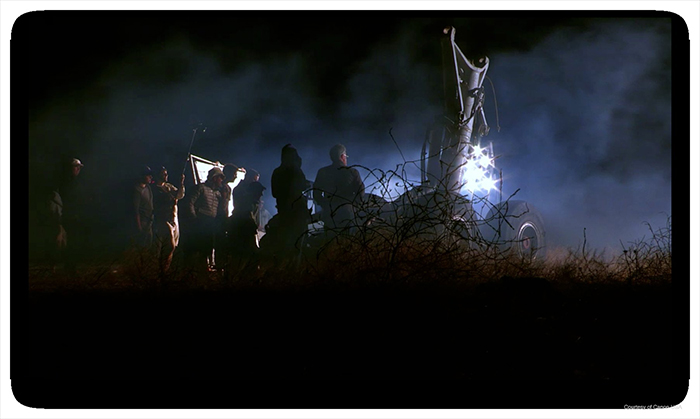
Low Maintenance often trumps talent:
The first lesson I learned in my professional life with regards to this took place when I was 16 years old. I was working at the Gamma Liason photo agency in the library pulling files. My job involved running around the library to retrieve contact sheets and slides when they were requested by sales agents for potential sales to magazines around the world. This also afforded me the opportunity to look at hundreds of photographers’ work from around the world of all different levels of skills.
At one point I noticed that one local photographer who clearly had superior work wasn’t getting hired nearly as much as another photographer who’s work was relatively lackluster
I sheepishly asked the assignment editor why she kept hiring the “lackluster” photographer over the photographer we mutually agreed had a significantly better eye.
“The [lackluster] photographer returns his pages in under 5 minutes,” she said. “Every time.” She continued: “The other one is always busy, and angling to see what the assignment is prior to accepting it, and I simply don’t have the time to deal with that for a lot of bread and butter assignments. If it’s something special I might make the extra effort, but I simply have too much to do,” she explained.
Basically, this wasn’t just a case of “the early bird gets the worm” it had a lot to do with the more “talented” photographer being effectively too "high maintenance". Simply put: he added stress to this assignment editor’s life, as opposed to making her job easier.
The “lackluster” photographer was cleaning house and getting assignments with a 5 to 1 ration over the other photographer, because he simply answered his pages (these were the days before cell phones or e-mail 😉 ) and did the job reliably with little fanfare. Every time. No muss. No fuss.
This was a key lesson for me early on. Basically: always try to find a way to RELIEVE STRESS for those hiring you. Even if you’re slammed with work – answer your phone calls immediately. If you’re successful and super busy: make sure you hire someone to do so for you.
When you think about it, it’s actually quite obvious but easy to overlook: When you don’t get back to people quickly it unfortunately sends the message that you don’t value them as much as what you are currently doing. Sometimes you don’t have a choice because you’re 100% committed to your current job, and it can be a very difficult balancing act to get back to potential new clients when you’re busy working for current ones, but even calling someone to tell them you’re in the middle of a job, and asking if they have the luxury of waiting for you to wait for you get back to them later can save you a job.
A few weeks later I remember overhearing the extremely frustrated “talented” photographer complaining to one of the sales agents: “Why in the world do they keep hiring the “lackluster” photographer over me!? My work is SO much better than that guy’s…”
Well that ego coast him tens of thousands of dollars a year unfortunately. Humility never hurt anyone. And it had (mostly) to do with his adding stress to the editor’s life by not answering his pages on time – it had little to do with talent.
His ego got in his way of the simple solution: asking the assignment editor with humility if there was anything he could improve on his end, in the hopes of getting more work. You’d be surprised how taking the time to ask such as simply question can be so effective – and how most people unfortunately revert to complaining or whining instead and to their own detriment.
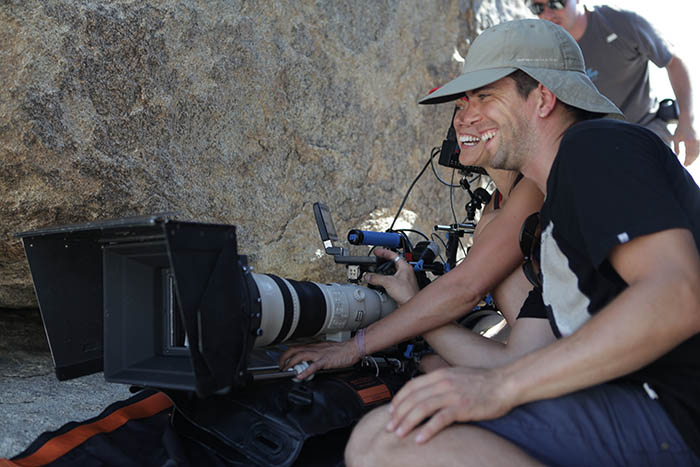
More recently I’ve found myself in a position to hire people on a pretty regular basis, either as a Producer, Director or DP. Obviously I’m always looking for the best talent I can get. Nowhere does the management principle of “surround yourself with talented people” apply more than in the film industry. There should be an addendum to that though:
Find people that are both talented/skilled and that have a predisposition to helping relieve stress, not creating it.
When things break down, when the weather turns foul unexpectedly, when a piece of gear fails – there isn’t always a clear, easy solution unless your part of a medium to large production with backup solutions on the ready.
I can tell you with absolute certainty that you will make yourself a quick favorite, if you deflect the stress of the situation and simply find a way to solve it, or at least offer up a quick alternative to “make things work.” Sometimes even when you don’t have a solution, a smile or an appropriate joke to diffuse the situation can work wonders to keeping the crew’s morale high. People who have those types of personalities or skills are worth their weight in gold.
The ideal situation is to have the managers, and producers who plan for all potential issues that might come up of course – but most of us live in the real word, one that often involves a dude with the last name of Murphy.
Producers can have plans for bad weather or excessive heat. They can have shelter for crew and backup gear in case things break down. (There’s no excuse for not having a tent, plenty of water, ice and sun-tan lotion when you’re shooting in 104 degree weather in a populated area for example: you have to protect your crew.)
Those who complain or have a negative attitude will likely never work for you again.
When things are FUBAR (look it up) stating the obvious helps no one. We all know it. It sucks. Deal with it and carry on. Or as the Brits said during WWII: “Keep Calm and Carry On.” I’ve never understood people who complain about things that simply can’t be changed.
To be clear: it’s equally important for crew members to bring issues up to their department heads when issues pop up – and ideally in a way that allows the production to stay on schedule. The caveat is that like most things in life: “Timing is everything.” There’s a time and place to make suggestion – but almost as importantly: a time not to. Obviously any safety issue should freeze a production in its tracks the moment is becomes apparent. Other than that: we all have to try to find a way to make things work together.
The tone in which you bring an issue up is also critical.
The problem in front of you is obvious to everyone, but it’s likely causing a chain reaction of problems for production that you may be unaware of: (Click on the link below to continue.)
 I don’t want to be alarmist and I actually have been unable to confirm anything officially through
 I just wanted to write a quick post to say that many of you will be very happy when you hear