Blog

Back to my roots: Photography & Fine Art

 FineArt

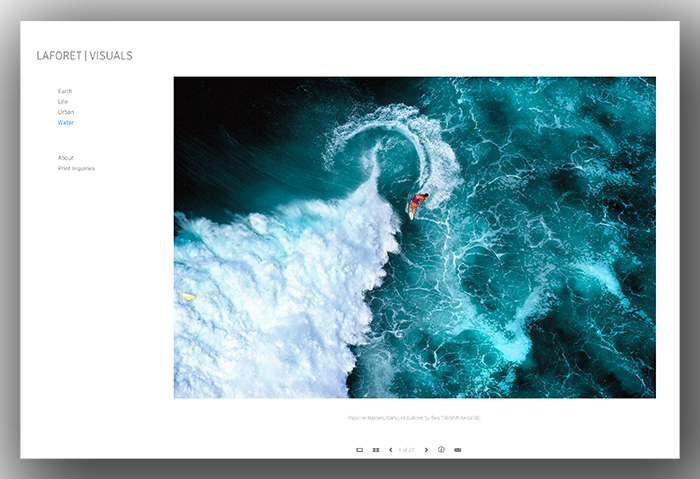
 2As many of you may know, I was an editorial and commercial photographer for nearly two decades prior to moving into the world of motion.     I’ve recently gone back to shooting still photography as often as I can in fact and I’ve put up a new fine art site that (click HERE) that displays a selection of some of my more successful photography and quite a bit of new work as well.

There’s something very magical about picking up a still camera with only one lens and going out for a walk, a drive, or a trip to somewhere unknown without much of a plan at all, let alone cases of gear and a crew to help you.

I’ll share with you an anecdote from my days as a staff photographer at The New York Times.    I remember running into a big film set in the streets of New York City and having the following exchange with the cinematographer once he locked eyes onto to my still camera and I onto his fancy Panavision camera, and we engaged in conversation.    I told him who I was working for, and that I was driving through the streets of New York on the lookout for a front page image that day (I’ll paraphrase the exchange…):

Him:  "Wow.   I’m so jealous of what you do… you get to go out and shoot whenever you want, wherever you want, all alone."

Me: "Are you kidding??!   You have all of these incredible tools at your disposal!   All of these lights, cast, extras, crew, cranes and lenses!  I’ve always dreamed of that!"

Him: "Well sure… but someday you’ll understand…with that comes a bit of loss in terms of freedom if you will…"

Truth be told, I didn’t understand then.   I have always wanted to go into the world of film since I can remember.    But now I do understand what he meant a bit more…
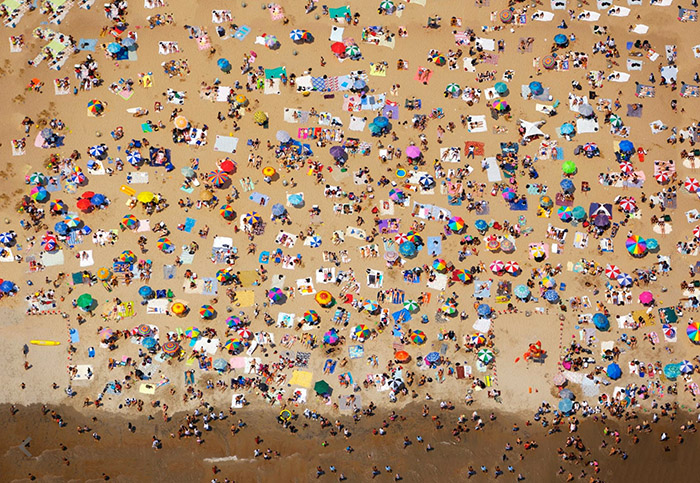
0 One of the most amazing aspects about filmmaking is the ability to collaborate with others.   To work with crew members and specialists in a lot of different fields in an effort to create an incredible scene with every single detail within your control.   I cherish the experience of preparing for a shoot and being on set today as my very favorite thing to do on this earth – at least on a professional level.    But there is something to be said about the relative freedom that still photography affords all of us…

I experienced something new about 2 years ago, right after shooting a short film with a crew of around 60 near Death Valley.   I went back by myself a few weeks later to Death Valley and shot a series of stills.   And I made this one image and something struck me.   I was LITERALLY one of 2-3 people within a very wide area.   There wasn’t a single car driving in the desert below ALL evening let alone the road I was on.   It was as close to being all alone on this earth as most of us can find in these modern times – at least in the U.S.   The headlights below are that of my own car in fact (w/ some safety cones and lights put out a few hundred yards behind it in case someone drove up..)   The image was lit by  moonlight.
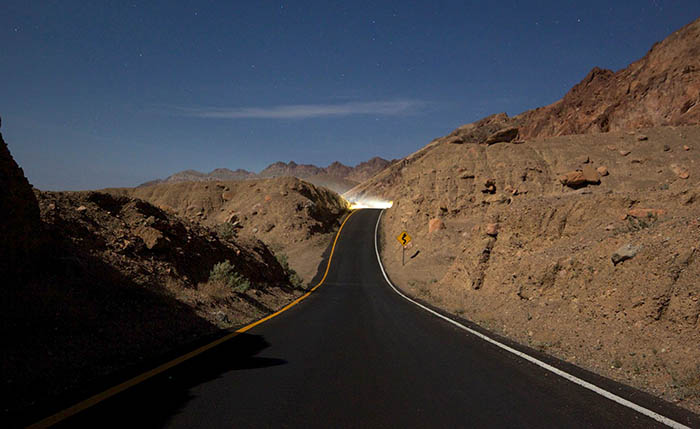
AloneI remember being struck at how magical photography can be.  And that after 20 years of doing it!   How magical it was to literally experience the sky rotating around you as you watched the stars change over the hours.   It makes you feel very free, very independent, very small and gives you tremendous perspective on where you are in this world, let alone in the galaxy.   It has the ability to give you both a good dose of humility and also the energy to dream big, and to let all of your troubles melt away.     You realize how small all our problems are and how the cycle of life, earth, sunsets, moon rises etc. go on day after day no matter what you do or don’t do.    And capturing that with a simple camera and a tripod, without a soul in sight is pretty darn magical.   No deadline pressures… no people to please… I now understand what that DP meant nearly a decade earlier.   I see the need for both disciplines in my life.   There’s a reason they call it the photography "bug."
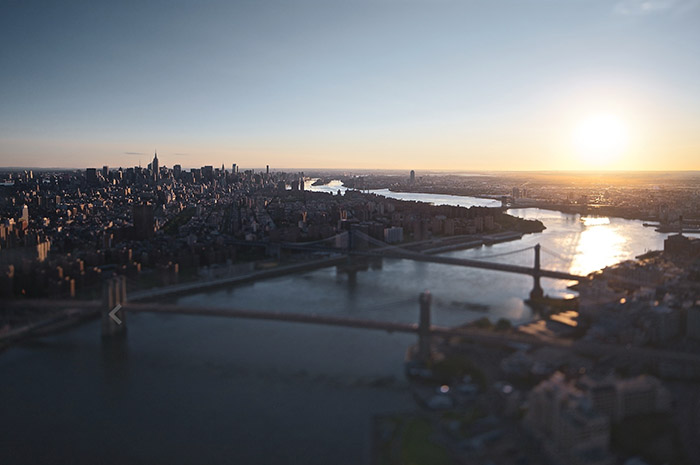
1To that end I welcome you to check out the new site, and some of the new work (I’ve shot a bunch since the site was being designed and will likely update it quarterly.)   You’ll see quite a bit of aerial photography (which I came to specialize in) which is one of my absolute favorite things to do.    You can also check out the following video (that I posted on this blog a few weeks ago) that captures my philosophy on photography, a video that a lot of people have told me they enjoyed.    Lastly – all of the photographs you see on the site are available as signed archival fine art prints should you be interested in having one on your wall.  I hope you enjoy the new site –  I know I’ve enjoyed picking up the still camera again tremendously.

A special thanks goes to Sarah Weissman for taking on the endeavor of editing a decade’s worth of work and to Rob Haggart and the entire APhotofolio team for helping put up a very elegant site.
 

Two Pretty Amazing shots with the MōVI and the RED Epic Infra Red in 5K

That ONE shot you missed… the one you will never forgive yourself for missing… you know the one?

Yeah – the one that you never forget, even though it never happened…

Outside of “killing your babies”  in filmmaking parlance (translation: editing out your favorite / gorgeous shots in favor of what’s best for the edit/flow of a piece), the shots you missed are always the hardest to distance yourself from – as a director, or as a photographer come to think of it.

Well there was such a shot we never got to, when we filmed the inaugural MōVI short… one that involved a handoff… a rope… and… well let have you see the video below to understand what we were after before I completely spoil it for you.

Let’s just say that that one shot stuck with Tabb Firchau, Hugh Bell (two of the co-founders of Freefly Systems and the MōVI) and myself for weeks after the successful launch of the MōVI – and we couldn’t wait to get the team back together for a second try at it…

You’ll see two Infra Red shots in the short below – the first one is a long tracking shot made at 48fps at 5K on a modified RED Epic – note that not a single one of the shots in this piece have been post-stabilized whatsoever.   What you are seeing is straight out of the camera and the MōVI with the exception of a little grading (contrast/saturation/neutralization of greys) – that’s it.

The second was our “trick shot” …  more after the video…

The RED Epic used on this shoot had the IR pass filter removed from the body – leading to some pretty gorgeous results.   Notably at 5K.   It’s pretty damn stunning to say the least…  My guess is that after people see this, I’ll have a hard time borrowing one of those bodies myself.    We used an IR filter taped to the front element of the Canon 24mm T1.5 lens which we had to shoot at F11 (ND filters don’t work in IR… so we were forced to shoot at 48 fps, a 90 degree shutter, and T11 to minimize the depth of field, as well as the reverse vignetting that takes place at that small of an aperture – always shoot as close to wide open as you can when shooting Infra Red to minimize this “bloom” effect. )

DP Polly Morgan (who worked on Mobius with me) and I worked out the shot together for the two Infra RED shots.  While we did do only about 10 takes total for the 2 shots – I have to say a special thank you to editor (and in this case stand-in camera operator) Jon Carr, as well as the SCO Sisters (the gorgeous Brazilian triplets) as well as models Heather Fusari (blue haired beauty) and Jacqueline Buda (hero shot swimsuit model) for their patience during the setting up and perfecting of the shot.   While we had no 1st AD, the biggest factor for me as a director was not the camera or the move, but making sure everyone was in their specific places, at specific times (without the use of radios…) That’s why I would walk behind the camera with a wireless monitor and call out the action.

Special thanks to The Music Bed for what is becoming one of our favorite sources for great music.  Featured as songs from Weaver at The Loom (Encyclopedia (Galactica)  – Instrumental) and Lowercase Noises (An Ocean Tumbled By.)  Special thanks to Ted Schilowitz, Brian Henderson, Nate Heartt, Jeroen Hendricks, Matthew Goodwin, Ken Fisher, Toby Sali, David Wolvek and the incredible location Hollywoodland.

The initial MōVI piece was a pleasure to work on – but the truth is that we were learning on the job.   We had never shot with the MōVI and I didn’t really know just what it could or could not do… and as a director, when you mix that in with stringing a long series of never-ending shots (which pretty much breaks every rule you learn about coverage and the art of the edit) it was challenging to say the least.

This was my 3rd job with the MōVI – and Tabb, Hugh and I finally got to make the second IR shot happen.   We nailed it on the 3rd take if I remember correctly.   The setup and execution took less than 20 minutes – and it was pretty magical to watch the replay.

The biggest surprise I’ve experience (now on my 4th shoot with the MōVI) and having heard the experiences of other directors/DPs that have worked with the gimbal – is just how fast you can now work.   DSLRs definitely helped speed things up significantly for many of us over the past 5 years, as have compact cameras in general.    The MōVI truly takes that to the next level – and with little to no sacrifice.  If anything the biggest thing you’ll have to fight is the need to make every single shot complex…  the secret to the MōVI is it’s not only its ability to pull off incredibly complex takes –  but mostly to do simply dolly shots – pushes, slides or even locked off shots in my opinion.   You can run through a series of shots at warp speed.   It’s incredibly liberating…   To that end, the last piece we shot with the MōVI (the 4th piece) is being edited now, and the goal with that one:  standard coverage.   Short takes mixed in with traditional length takes and moves… not too much fancy stuff.   Good old coverage and shots – just done with a new tool.  At about 3 to 5 times the pace we’re all used to…

I’ll leave you with a final anecdote:  When I premiered “Reverie,” the first short shot with the Canon 5D MKII five years ago in front of 500 artists on a 50 foot screen at Industrial Light and Magic – I had the honor of meeting Dennis Muren.   Denis is one of the Godfathers of Special FX, notably Star Wars, A.I., Super 8, Twister, Jurrasic Park, E.T. – you know small films…    when he first saw the footage coming out of the 5D MKII he had a very prescient comment:   “This is going to lead to a lot of shallow depth of field garbage footage…” he said.   Frank and sadly, somewhat true…  We’ve all learned that shooting a narrative a T1.2 on a 50mm on closeup with an actor going in and out of focus with every breath, ISN’T a good idea…

I think the MōVI will lead to some incredibly complex shots, and long takes – but with any “game changing” technology comes the need for discipline:  you will need to CONSTANTLY remind yourself that you don’t need to make every take an “epic” one…

You’ll need to remind yourself that:  “Just because you can… doesn’t mean you should…”  and sometimes if not often “less is more.”   And oh yeah:  K.I.S.S. – Keep It Simple Stup#d….    because while the tool will open up so many doors and creative possibilities, it won’t re-define the way we should shoot coverage, or the pacing of cinema.   And the beauty of the MōVI is that you can do a 10 minute take just as easily as a 10 second slide, let alone a 2 second locked off shot.


Quick Note: Technicolor Color Assist now supports Apple’s Final Cut X

Technicolor Color Assist: Final Cut Pro X Workflow Tutorial from Technicolor CineStyle™ on Vimeo.

A quick note to say that the Technicolor Color Assist software which is a wonderful way to quickly set a look (or color grade/correction) on the set right there on the spot (on a shoot large or small) before those drives get shipped off into never never land… is now supported by Final Cut Pro X.   The basic idea is to do a basic color grade or look on a calibrated monitors or laptop screen on set as you shoot, and to be able to easily translate that to another user (Editor/Colorist) using Color Assist in conjunction with Final Cut Pro X or Adobe Premiere who is doing the post remotely.  To read more about the award winning software you can read more about the software on my blog here and on Videomaker.com.