
My Gear: Lenses
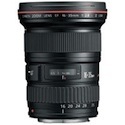 |
EF LENSES: This is my collection of lenses that use an EF mount for Canon SLR cameras. I have been shooting with them for almost my entire career - first as a photographer, and then with video. EF glass is some of the sharpest out there, and works well whether you are shooting stills or motion. |
|---|
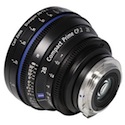 |
CINE LENSES: Since I became involved in filmmaking, I have used Cine Lenses more and more often. These lenses are built differently than traditional still photography glass so that they function well for shooting films. They often have distance marks on both sides of the barrel (for an assistant to pull focus), hard stops on the focus ring (so that the distance marks are always accurate), a geared focus ring so that the lens can interact with a follow focus, and measurements of aperture in T-stops (instead of F-Stops). |
|---|





V. Can you go into a little more depth regarding the 24-70 vs the 24-105. I have heard both opinions (some who swear by the 24-105 forsaking the 24-70 for it), but no opinion from anyone who has used both lenses for still and cinema purposes. In your opinion what makes the difference that leads you to say “Personally – I’ll take the f 2.8 24~70mm over this lens any day.”? Is it something tangible or is it just an intangible factor?
Reply
Vincent Laforet Reply:
August 30th, 2010 at 5:48 am
@Brett Flashnick, Well I own both – and ONLY use the 24~70mm 2.8… truth be told: outside of the 500mm f4 – I find f4 lenses too dark… I’ve also found that the 24~105mm can vignette wide open at 24mm a little bit – whereas the 24~70mm is flawless wide open at all focal lengths – so I’m sticking w/ the 24~70mm 2.8 myself – but as mentioned – others SWEAR by the 24~105mm 4 – so I think there might be some bias on my part for liking to shoot at f 2.8 – especially w/ low light in video mode with the HDDSLRs.
Reply
Brett Flashnick Reply:
August 30th, 2010 at 11:57 am
@Vincent Laforet, Thanks for additional information about those to lenses. From what I have discerned it seems to come down to a matter of personal preference. I guess its time to get both lenses in hand simultaneously and formulate an opinion of my own.
Reply
Nice rundown on the Zeiss lenses, they are fascinating lenses, I just hope that some of the rental spots will start getting them in stock soon.
Reply
Vincent Laforet Reply:
September 9th, 2010 at 12:02 am
@Joshua, Me too!
Reply
I’ve been considering purchasing a 500mm f/4 IS for some time now and am about to jump in. You and others mention the ability to hand hold it for photography, but I’m curious what your experience on how to best support this beast for video? Any thoughts on what would be most portable but still allow for smooth video movement? Does a Wimberly head and some high quality carbon fiber Gitzo sticks do the trick?
I’ve done a lot of searching and can’t find the answer for video.
Thanks for taking the time to put all of this together and leave it open for comments. You are, and have made, an amazing resource.
Reply
Vincent Laforet Reply:
September 9th, 2010 at 12:03 am
@Kyle W., A solid tripod will work – but a Wimberly will NOT work well for Video in my opinion.. I’ve tried – and w/ a 500 mm – forget it… v
Reply
Vincent,
Excellent review of lens, camera and gear. Can you also cover typical vendors you have/will use…for example helicopter outfit, edit houses, rental gear houses, etc.
Once again thank you for inspiring, sharing and taking the time to document it!
-Sandrino
Reply
your pockets are deep vincent 😀 … what a budget…
Reply
Vincent Laforet Reply:
September 9th, 2010 at 12:04 am
@pixelmixture, I rent! I don’t OWN all of this stuff… but I do own most of the glass and cameras…
Reply
I thought you had Canon’s 200 f/2 — have you stopped using it, or is the 300 f/2.8 a more versatile option?
Reply
Vincent Laforet Reply:
September 9th, 2010 at 12:04 am
@Charles, Need to add that one…
Reply
Very useful information, thanks for sharing your knowledge. We shoot a lot of TV spots on the 5D, and still most cinematographers in Brazil have no clue how to master it, they should check your blog.
Reply
Thanks for this info on the Zeiss glass. do you find the “breathing” of these CP lenses during big focus pulls as significant as the other Zeiss cinema glass (like the Super Speeds, for example)?
Reply
Vincent Laforet Reply:
September 9th, 2010 at 12:06 am
@Gregg, Haven’t done side by side tests…
Reply
Hi Vincent,
Excellent review. I can only drewl at those Zeiss compact primes – for $24000 and up they’re a bit out of my league.
You called the 85 F1.2 a jewel. I have it, but I find the focus ring way too loose, which is why I rarely reach for it. How’s your experience with that aspect? Should I just throw it into my bag more often?
Reply
Vincent Laforet Reply:
September 9th, 2010 at 12:06 am
@Richard van den Boogaard, If anything – I find the focusing on the 85mm 1.2 a bit SLOW… is that what you mean by loose? That’s a good thing – but hard for rack focuses unless you can use a geared Follow-Focus rig…
Reply
Richard van den .. Reply:
September 10th, 2010 at 8:54 am
@Vincent Laforet, no, just loose… as in not tight to handle. I heard Philip Bloom say the same thing about this lens…
Reply
Vincent,
As you are person who uses almost every good glases . How do you think the quality between zoom’s and primes in general . Is there a significant difference if you take 2 lenses lets say canon 24 2.8 vs canon 24-70 2.8
Reply
Vincent Laforet Reply:
September 9th, 2010 at 12:08 am
@Rupak Anto, Yes – on the edges – if you’re making large prints you’ll definitely notice. In general the primes are much sharper in general – BUT – there is software out there that does some pretty amazing stuff to sharpen the softer zooms… so it all depends on what you need…
Reply
Hi Vincent, I enjoyed watching your video on the gears! What would you say would be budget for the gears you have recommended above. Appreciate your willingness to share your knowledge. Thanks. John
Reply
Hi Vincent,
HUGE fan of your work and the wisdom you share. Thank you!
Quick question about lenses — I really trust you and would love to get your thoughts on the Schneider Cine Xenar lenses:
http://www.abelcine.com/store/Schneider-Cine-Xenar-5-Lens-Set/
I don’t think they cover the full frame sensor of the 5D — but designed for S35 size like the 1D …
Anyway, Mitch at Abel said they are “Leica-like” in their style and quality, and many DPs like Shane are very big on Leica lenses.
Would love to hear your thoughts if you ever try them!
Anthony
Reply
I loved reading through this page. I have seen some of your work, and have always been awestruck.
One question – it says that the 1.4x converter makes the 400mm into 640mm. I always thought that it makes it 560mm. Just checking to make sure that I haven’t been doing something wrong.
Thank you.
Reply
Paul Reply:
September 29th, 2010 at 8:54 pm
@Vaibhav, yes, it’s 560mm. Vincent probably did the math real fast in his head when writing, because a crop camera like the 7D is 1.6x which would give you 640mm. I’m sure he’s thought of the crop conversion so often that 400–>640 is burned into his memory! NOW, mount that 400mm on a 7D with a 1.4x and you get the equivalent of 896mm at f/4! WOW!
BUT, I still prefer the full frame of my 5D Mark II user… no more math on the lenses! 24mm is 24mm, 200mm is 200mm, no thinking about it, lol!
Reply
Hello Vincent
I was wondering-have you ever tried the new 70-200/f4IS? (not the first generation f4 but the latest f4IS)
I have been carrying the old 2.8 for many years (since the Fuji RVP50 days), but after the new f4IS I think that I no longer need it. I shoot professionally with the 1D (1.3 sensor), I don’t shoot video, and I use the 70-200 a lot. Am I missing something?
Costas
Reply
Dear Vincent,
I was wondering how you would use a mattebox with the 24-20, because its end extends when you zoom. Is the little change insignificant?
Thanks in advance,
Pau
Reply
Pau Reply:
September 28th, 2010 at 9:10 am
@Pau, Sorry, I meant 24-70.
Reply
Hi Vincent,
Great post, very helpful! I wanted to know if you had some gear tips for people on a budget. A few specific questions:
1. Would you rather spend more on a good camera and decent lens or decent camera and good lens?
2. With a 1,500 – 2,000 budget, how would you build around a 7D?
Thanks a lot!
Reply
What do you think of using older canon or nikon fd lens’s on a 7d for shooting films? It seems to me like they would be good because they have hard stops at infinity and macro as well as he focus ring spins quite far compared to a newer USM lens.
Reply
Vincent,
Not sure you’ll get around to answering this one, but I’m wondering which EF lenses lend themselves best to pulling focus for video. IE, which have the longest pull on the focus ring, bringing some of the advantage from the zeis CPs. The TS-90 for example has a long pull (and therefore finer focus control) compared to the 24-105.
–Ken
Reply
Hey Vince. Quick question for you. I’m shooting on a Panasonic HMC-150 and want to migrate to the next Canon HDSLR whenever it comes out. I curious what lenses you would recommend someone to get when they are starting out with video?
Reply
thank you sooo much….I am about to shoot a short movie with my 1d M4 and this page had helped me A L O T….
thank you & thank you
Reply
Vincent,
I need your help please get back to me as soon as you can.
I cant decide. Just need you to pick one for me and give me a solid reason to keep it.
I have both the 24mm prime 1.4 and the 24-70mm 2.8.
However need to part with one or the other to financial reasons.
Which one should I keep?
Please let me know.
Thanks.
Reply
Harmony Reply:
November 22nd, 2010 at 10:47 am
*due to
Reply
Vincent your knowledge and gadgetry are unsupassable and its wonderful that you share ..I have recently started to using the 7D to shoot video, but find that the camera heats up pretty quickly due to the battery – what external battery would you suggest and how do you hook it up – thanks much for your help !
Reply
Vincent Laforet Reply:
December 16th, 2010 at 9:12 am
@Brian Hendler, Thank you Brian! The truth is: there is nothing you can really do to attenuate this that much… and the 7D is the worse of the 3 Canon bodies (5D/1DMKIV/7D) in terms of over heating… Ideally you swap out bodies every hour – Shane Hurlbut does that – but I’ve never had to. I did have it overheat a few times – and I shut it down for a few minutes. I also put a bag of ice on the body once and it worked…
I do use the Viewfactor Contineo cage to power my 7D and 5D – I can’t make any claim as to the overheating issue (I think it’s a sensor issue not a body issue) – but it’s how I use these bodies and power them w/ Anton Bauer batts… check the “My Gear” section and you’ll find the cage and batteries there – v
Reply
I’ve never noticed it before, but you suddenly look like Grissom from CSI. Great reviews! Love to see all the equipment you’re currently using. Very interesting.
Reply
Vincent,
You’ve got a great selection of gear, but you miss out the two genuinely special Canon EF lenses: the 50mm f/1.0 and the 200 f/1.8, both discontinued now. I’m lucky enough to own both: the 50mm f/1 is finnicky all as hell to get good results with, but there is something about it that is genuinely magical and unique when you nail it. I have used the 1.2, and it doesn’t come close. Given your obvious large budget, I would really recommend you try and pick up one of each to play with.
Reply
As good as the EF 500mm f4 is, with the introduction of the new lightweight EF 400mm f2.8 II and the new 1.4x III teleconverter the quality levels and application options will more than likely outperform the 500mm. 400mm x 1.4 = 560mm f4 with outstanding resolution according to the Canon lens charts; given that price is no object. Also try 800mm f5.6 with the new 2x teleconverter!
Reply
Vince could you please recommend an ideal lense choice for a 7D for documentary work that will be on a steadycam merlin arm & vest
Reply
Hi Vincent,
I currently have a 5D Classic, a 50 1.8, 100 f/2, and a 70-200 f/4. I’m looking to get into magazine work or photojournalism after college, and since I’m a big admirer of your PJ and video work, I figured I’d ask you about lens choices. I’m thinking of a 24-70 to fill the wider/standard length. Would you recommend this or something else?
Also, I was wondering if you had any suggestions in regards to building a good portfolio for either of these outlets (photojournalism/magazines) I was thinking of seeking out stories throughout the city(baltimore), but I currently don’t have any means of publishing them.
Thanks for any advice!
-Joe
Reply
Fanstastic point of view. I may msg about it my to friend! Grafik Komputerowy.
Reply
Hello Vincent!
I have a question that is hendering me from a purchase. The 50mm 1.2 is obviously the best choice out of the 50mm 1.4 and 50mm 1.8. However, I don’t have the money to purchase it. Between the 1.4 and 1.8, which is better in video quality?
Reply
I have 2 questions for you real quick –
1) I’m looking for lense to start shooting video
with and I currently have the 17-40L, the 50 1.4 and the 200 2.8 prime, I’ve been debating if I should get the 70-200 2.8 or the 100 2.8 macro – which one do you find more useful in the video aspect of shooting?
2) Have you come across any anamorphic lenses that work with the 5d MKII (either EF or FD compatible)?
Thank you for any insight
Reply
Vincet howe are you? I know you might be busy preparing for the workshop with Chase, but i have a quick question to ask.
What is different between Zeiss CP2 85 f2.1 and canon EF 85 1.2?
I want it for video and we already planned to buy the Zeiss 35 CP2.
Do u have any video sample shot comparing both of them or sth?
Reply
Hi Vincent,
If using a 7D, would you still recommend the 24-70 over a 16-35?
Cheers
Reply
do these lenses have to be made by canon if u want to use them with a canon 7d camera?
Reply
I’ve used some older Zeiss primes on my 7D and they produce amazing still images, but ironically, I think the video footage is noticably inferior to the stuff I get with my Canon lenses.
Any thoughts as to why this might be? Haven’t tried these new Zeiss CP.2 lenses yet. I’m sure they’re more adapted to video work.
Reply
don’t quite have the budget and just starting out,,, any thoughts on the Canon EF-S 18-200? I bought a 50 1.4 for my first lens( again budget preventing me from getting the 1.2),,, and thought the 18-200 would be a good walk around camera? i want to shoot a lot of video with both of them
Reply
Vincent,
Have you experienced focus shift problems with the Zeiss 50mm 1.4? And if so, What is your assesment of this? I am looking into perhaps buying one of the distagon wide angle lenses of theirs for my 5d mkii and have read that the focus issues can be annoying.
Reply
Vincent Laforet Reply:
April 27th, 2011 at 11:42 am
I worked with a set of Zeiss ZEs for 2-3 months and never experienced the problem. I have since shifted entirely to CP.2 lenses – so I can’t give you a long term opinion on it as a result. Fair enough?
Reply
Hi Vincent,
You should try some of the Hasselblad lenses [Zeiss] with EOS adapter. My go-to is the 50mm/2.8 [equiv to 35mm], absolute favourite is 110mm f2 [will blow your mind with actors head/portraits], the 150/180mm are great for fashion runways. I find they give a more “organic” look with the 5d and 60d[need the swivel screen for filming restaurants].
rgds
Kostas Metaxas
http://www.exero.com
Reply
Hello Vincent,
I have the old 5D and have a couple of lenses (28mm 1.8 and 85mm. 1.8). I am just starting to learn these lenses. What f/stop should I use to get the sharpest image possible? Thanks.
Reply
Vincent Laforet Reply:
April 29th, 2011 at 2:13 pm
Close the lenses 1 stop from the minimal f stop and you’ll generally be good. F4-8 is often the sharpest area for most lenses.
Reply
Really an impressive list of gear. The best thing is that you use it in a creative and interesting way.
I really appreciate your work.
Reply
@Vincent Laforet, Hi…I have had this overheating problem several times…not only 7D but also 5D. The only camera that it doesn´t even starts to give any signals of over heating is the 1D MKIV. The problem seems to be not only the battery drainage but also and specially because we “force” the mirror to be up too long…of course together with the sensor the heat buiolds up quite fast. Another reason is that being a weather proof camera the heat doesn´t come out as the dust and moisture don´t get in…
We can´t have both things on the same camera. If Canon adds a cooler some ventilation etc…etc…we will loos the weather pfoof seal but also we will have a mucher higher price on these cameras.
Reply
Thank you.
Reply
A few months ago, I came across a video where you were speaking to a technician in regards to adjusting – fitting lenses to one of your cameras. I have a couple of Hasselblad lenses that I would like to have fitted to my 5D II and would like to see if that is doable.
Can you provide me with the contact info of that person. I can no longer find the initial video.
Thanks for sharing your work and experience
I really appreciated.
Reply
Vincent Laforet Reply:
May 4th, 2011 at 1:48 pm
http://ducloslenses.com/Duclos_Lenses/Main.html
Reply
Hi Vincent
Thank you for posting the gear you use. I have a question, I’m about to go out and spend $5000 on lenses for my my 60D, witch do you think I should spend my money on?
Reply
Dare Reply:
May 8th, 2011 at 10:02 pm
Vincent sort of answered this already if you have a look under each lens and I can confirm them to be good choices:
1. 24-70
2. 70-200
Buy the highest quality in each series you can afford.
After that it sort of depends on what you plan to shoot…
Reply
Thanks a lot!. I’ll look into it.
Appreciate the quick response
Reply
Hi Mr. Laforet,
I am trying to view the lens page in your gear section and all that comes up are the comments.
Seth Shaffer
Reply
Hey Vincent,
I was wondering what happened to the content on this page? The run down of your lens list and the examples of how you’ve used them was a great reference.
Any thoughts that it will be back on the site?
many thanks!
Reply
Thanks for the 24-70 and 70-200 lens recommendation. However 24-70 is a bit tight on the wide end. Will you suggest the 17-55 f2.8 IS as the replacement of the 24-70 for crop body like the 7D?
Reply
Vincent Laforet Reply:
June 10th, 2011 at 9:52 pm
Yes – but I haven’t used that lens! I recommend the range. The 24~70 is perfect on a full frame 5D MKII – but as you said too tight on the wide end on the smaller chipped 7D
Reply
Awesome list of lenses, Vincent. Out of curiosity, what are your thoughts on other alternate lenses such as the Leica R line? I realize these are old lenses, somewhat difficult to find and limited it what can and can’t fit the 5D2. I’ve been experimenting with several Leica Rs modified with Leitax adapters and the images are ethereal.
Thank you for your continued evangelism of DSLR filmmaking.
Reply
@Vincent Laforet, How do you figure out what a stop is in terms of fstops. for example how many more stops is f1.4 than f1.8.
Reply
Vincent Laforet Reply:
July 15th, 2011 at 12:03 am
http://en.wikipedia.org/wiki/F-number#Standard_full-stop_f-number_scale
Reply
Awesome stuff here. My major concern is that you targeted it at those with deep pockets. There is this category of DSLR filmmakers that want to buy a set of 3 fast primes for $1000 (not minding using adapters). In my opinion, this category constitutes almost 65% of DSLR owners.
They also need some advice.
Reply
Vincent Laforet Reply:
July 15th, 2011 at 12:02 am
I’m trying to share things I’m playing with – high end and low end and mid end – something for everyone. But I don’t want to try to write for only one market – I’m simply trying to share what I work on with people out there. I haven’t forgotten DSLRS… there just hasn’t been a big development in awhile now. If and when there is one – you can expect me to write about that too!
Reply
What about the 17-40mm f/4 for a crop-sensor as as starter-lens next to the 50mm f/1.4 ?
At 600 bucks the 17-40mm is quite tempting.
Or do you really need more light when you want to do a lot of lowlight/night shots?
(Man, I want to have your gear, dude…)
Reply
Vincent Laforet Reply:
July 21st, 2011 at 10:33 pm
Hey Frank! I don’t own all of the gear on these pages! But – yes – I think you’re going to find it too dark… I’ve never liked an f4 lens shorter than 300mm… you always want to shoot in low light when you have shorter glass.. THAT BEING SAID: the newer bodies are giving you 1-2 more stops of light in terms of ISO performance… so this might not be as bad as I think…
Reply
@Vincent Laforet, Do you think there will be a big update soon with the DSLRs, such as 5D3? Do you think it’ll be another revolution, (eg. RAW) or just minor update? Phillip Bloom says you have all the answers… 😉
Reply
I am shooting video on Canon 5DMk2 I want the Zeiss Compact Prime CP.2 85mm but the price is hefty and nearly twice the price of Canon EF 85mm f1.2L II USM. Can you explain the differences between these two lenses in regard to shooting video… please.
Reply
Vincent Laforet Reply:
August 15th, 2011 at 6:43 pm
The Canon 85mm 1.2 II is a jewel of a lens. But it’s incredibly difficult to pull focus with it on a moving subject. The 85mm is wonderful (and a stop or so darker btw…) but I’d go w/ the Zeiss CP.2 hands down when you need to pull focus on an actor – nothing matters if everything is out of focus…
Reply
Hi ,
Could you give your thoughts on the Canon L 70-200mm non IS lens- for stills is it still a competitor if you don’t need IS a far as Image Quality and sharpness?
Other than IS what would be the noticeable shortcomings compared to the newer IS versions please?
Thank you,
Hoon
Reply
Vincent Laforet Reply:
August 19th, 2011 at 1:58 am
The IS version was sharper than the non IS – but the latest version (II) of the IS – is INCREDIBLY sharp relative to all previous lenses. So there is a definite optical performance difference – for sure.
Reply
Hi Vincent,
Thanks for the all helpfull shares and answerss, I wanna make lens kit for my Canon5DMK2. I’m living in Turkey and here is hard to find cheap lenses from your packege (as you know taxes, shipping, etc.) thats why I wonder which brand must I have for lenses? Carl Zeiss or Canon ? I’m a videographer btw, for example first of I need a wide angle lens for low light (for indoor records) and what is the diffirence with this brands (canon and zarl zeiss) ? Color or sharpness ? what you prefer to me for video shooting?
PS: Actually I made introductory films for Hotels like this one “http://www.youtube.com/watch?v=NpLxdDNN9ow” and this is my first film with my Canon5DMK2 btw. I was use only Canon 24-70 USM L 2.8 lens in this video and I think I dont like this lens for my job. Cuz, it is so darker for indoor works and for outdoor when I use with Jimmy Jib I must use infinty sharpness for to see all of area with F22 but this time quailty is gone be bad as you see. Do you have any advice for me about lenses for my works? Thanks for the answer already… (and sorry for my english)
Reply
Hi Vince,
A Big Thanks for the time and effort you put into sharing your huge knowledge and experience (when you could instead be making more money, or kicking back over a beer). Your generosity enables newbies like me to jump the gun and not waste resources on useless purchases and dead end experiments learning the hard way. The first movie I saw done HDSLR was your ground-breaking Reverie, which opened my eyes to a world of possibilities. I was hooked. Will definitely be purchasing your instruction vids and recommending them to all. Cheers mate! Paul Folley, Sydney, Australia.
Reply
Hello Vincent,
Been following your work for a while and really enjoyed the format of “Visuals” on the iPad. Good stuff.
I use a 5DMII & AF100 (eagerly awaiting my Birger preorder 😉 But am looking for telephoto. I have the 70-200mm f2.8 L IS and 2x teleconverter. There are times I want more length. Im torn between upgrading to 70-200mm f2.8 II L IS (is it worth it? Will cost about $1000 if I sell mine and buy new) Or plunge and take your 500mm f4 L IS advice? I know its not totally apples to apples but this is my priority dilemma. Im sure I will use 70-200 either I or II more but….
I appreciate any feedback and keep up the good work!
Reply
Hello Vincent,
u r the godfather for all dslr video thx for u woork man u r inspiring and giving hope to others by u r work
iam a film director
i do features , i have 5d and 7d
canon:24-70 f2.8,70-200 f4 L “non IS.28 f1.8 and zeiss ze 50 f1.4,canon 85 f1.8,rokinnon 14 f2.8 .85 ff1.4, 500/100 f8/16
i traded alot of lenses for this set tried to match it as much as possible .
do u think i have problem in my list?
how is the ze should i sell it for canon f1.4 ” cant afford the f1.2″ or it is not that big issue
how is the rokinon manual lenses any use?
plz help i shoot with different dops so plz help me match and arrang” yes sorry, money is anissue”
but as everyone iam going upon silver screen soon thxxxxxxxxxxxxxx
sorry for being long and booring and”weak in english as its not my language”
Reply
@Randy Noland, For what it’s worth, I sold my 70-200mm f2.8 L IS and bought the II version and extender 1.4III. Amazing image. Also added the 100mm f2.8 L IS macro. Longer range telephoto Will have to wait and rent if urgent. Nice work w/C300 btw!
Reply
@Vincent Laforet:
Great reviews on the important lenses. Very useful for anyone looking to extend his lens portfolio. Couple of comments:
EF 15 mm/2.8 Fisheye — One of the biggest issues with this lens is the metal lens hood. I don’t know what the engineers thought when they designed that one. The hood sits rather loose on the lens, and it can easily happen that it slips off and -eeek!- slides on the glass. I had my own solution for that: I took an old sock and stuffed the entire combo into it, so that the hood always sits tight on the lens.
24-70/2.8L and 70-200/2.8L II IS — Every single word you write about these lenses is true. Readers starting the photography career should take a look at these lenses first, before looking at specific lenses that cater to niches.
85/1.2L — I love the images this “jewel” takes, but the AF is really slow, the manual handling of the focus ring is weird, and I hate the fact that you can only focus when the camera is switched on. Also, finding a correct focus point is surprisingly difficult (esp. on a 1Ds III).
And one suggestion for you. You seem the right person to take a look at the Hartblei Zeiss lenses. Hartblei uses Zeiss medium format glass for DSLR mounts. Incredible gear. More at http://www.hartblei.de
Reply
Is the 24-70 good for 7D?
Or would it be a waste on it?
Reply
Vincent Laforet Reply:
November 22nd, 2011 at 9:55 pm
Never a waste. One of the best lenses Canon makes.
Reply
@Vincent Laforet, probably, but still wish I would have Full Frame and could use full coverage. Hopefully Canon will release some new kick-ass FFs next year with latest technology.
There is one major complaint about 24-70, though.
If it would have IS, it would be the best “allround” lens ever made.
Reply
Vincent Laforet Reply:
November 24th, 2011 at 10:49 am
IS would be nice yes…
Reply
Vince, hope you have the time to guide me..
im buying a 7d to be used for video… can u guide me wich option u would start with? or maybe a mix between these?
lens option 1
50mm 1.2
16-35mm 2.8
70-200mm 2.8
lens option 2
50mm 1.2
24-70mm 2.8
70-200mm 2.8
lens option 3
50mm 1.2
85mm 1.2
24mm 1.4
Reply
Vincent Laforet Reply:
November 24th, 2011 at 10:48 am
Option 1. On a full frame 5DMKII I would go w option 2.
Reply
Hi Vincent, lot’s of great lenses here. What do you think about the Canon 17-55mm IS F2.8 USM, i see that this lense is not listed, will you recommend it for video shooting? thank you very much.
Reply
Vincent Laforet Reply:
November 24th, 2011 at 1:12 pm
It’s quite a nice lens for the smaller sensor cameras. I’m not a big fan of its focusing ring however… way too small and hard to focus
Reply
Hi Vincent,
Thanks for all the great informations you gave here.
Very interesting. I’m a little confuse cos a lot of people suggest me to buy a IS lense especially for hand Filming… Is there anyone you would recommend with a great stabilization. Thanks
Reply
Vincent Laforet Reply:
November 24th, 2011 at 1:12 pm
IS for video cameras is incredible. The IS for still lenses is not quite the same … it helps but not nearly as much as the video version of those lenses (that are only available with camcorders or high end video lenses.)
Reply
@Vincent Laforet,
Thanks a lot Vincent! Surprised i got an answer from you, really appreciate it!
my idea was to buy the 7d meanwhile the 5dmark2 replacement comes out… would u still go same way? or would u rather have the 5dmarkII w option 2? instead of 7d w option 1?
Reply
Vincent Laforet Reply:
November 25th, 2011 at 12:18 am
I’m a big fan of the full frame sensor personally… 7D is not a bad way to go though.
Reply
Hi Vincent,
Canon 50mm f/1.4 or Distagon T* f/1.4 50mm ZE Lens? This would be used with the Canon 5D Mkii
Reply
Vincent Laforet Reply:
December 12th, 2011 at 12:29 am
or video – Zeiss. For Stills Canon (AF is tough to give up.)
Reply
This really means a lot to me, because I was really wondering about that 24-70mmf2.8It was either a 7d with 3 lenses or just the 5dmkii with that 24-70mm budget wise. I just starting off and would like to have something that can shoot weddings and do portrait and fashion too… Doing it with just ONE lens will have to do, but thanks to you, I believe i’ll have no buyers remorse! And, after I pay my bank loan that I’m trying to get to buy my stuff, I’ll definitely try and get that 70-200, I was looking in to that one as well….Thanks! Tweet you later!
ps.
Be on the look out for that Tijuana based Wedding/PortraitFashion Photographer!
Reply
Vincent,
Love your work and dedication to inspiring young film makers like myself!
Need your help on making a tough decision. I’m currently trying to achieve the “film look” and really trying to be competitive at several film festivals with a great concept I have developed.
Would you rather:
1.) Buy the 5D mark II with the 24-70mm f/2.8 L
2.) Or Buy the 7D with the 70-200mm f/2.8 L II
Both with roughly cost the same amount but really want to achieve the best image quality in terms of film.
Reply
Vincent Laforet Reply:
December 13th, 2011 at 10:31 am
Option 1 hands down.
Reply
@Vincent Laforet, Even if I plan to upgrade to the 5D MarkIII in a year or so?
Reply
@Jean-Francois, I also shoot a lot with the 17-55 F2.8… for shooting BTS I find it is a good range on my crop frame 7D.
Reply
First let me say thank you for ALL the great information you provide. Heck the time involved in just this blog is greatly appreciated. Tons of great information. I am not a seasoned photographer If i have the chance to buy either 70-200mm f/2.8L vs 70-200mm f/4L IS for very little difference in cost what would be your suggestion. Or should I just continue to save for another month and get the 70-200mm f/2.8L IS II. Thanks for all your great information.
Reply
Vincent Laforet Reply:
January 19th, 2012 at 8:55 am
I think you’ll be fine w/ any of the 3. The 2.8 is a big advantage so I would go w/ that. The IS II is supposed to be incredibly sharp – but the others were too… so I don’t think it’ll change your life either way!
Reply
Hey Vincent.. I ‘m a big fan of your work..
I’ve been debating in whether buying the Canon 60d now and buy some extra lenses or just wait a while more and buy the 7d and not as many lenses with it. I would be using it for both video and stills. What do you think? Thanks.
Reply
Vincent Laforet Reply:
January 19th, 2012 at 8:54 am
think you’ll be fine w/ either to be honest!
Reply
Hello,
I enjoyed your presentation immensely at BH Photo and Video- apologize I was asking the geek questions.
Between the Zeiss Makro 50 and the Zeiss 50 -almost twice in price……..Is there a superior optical quality which warrants this price difference? faster lens actually cheaper
Happy Holidays!
Thank you
Hoon
Reply
Vincent Laforet Reply:
December 20th, 2011 at 12:01 am
Haven’t tried the Makro so I can’t speak from experience…. thanks for coming to B&H!
Reply
Hey Vincent,
First off, thanks for this blog. It’s helped me tremendously already and I always look forward to new posts.
Quick question about a lens option with my 7D. I need something a little wider and I know you rave about the 24-70mm, but will that lens be too tight on the cropped sensor?
If so, any other lens suggestions in the “wider” range? Thanks again. Keep up the good work. We all appreciate your help.
Reply
Vincent Laforet Reply:
December 22nd, 2011 at 5:50 pm
17-55 2.8 if you have a 7D – 16~35mm 2.8 II is the only FF zoom
Reply
@Cameron Deutschendorf,
Vincent, you answered my question is today’s TwitterView. Thanks again for the great advice.
Reply
Hello Vincent, what are your thoughts on protective filters on L-Series lenses, for example the Hoya HD Clear Protection Class Filter on the 24-70mm f2.8? I recently invested in the 24-70mm f2.8 and now I’m contemplating how to protect this lens from dirt and more specifically accidental scratches. Some individuals tend to advice against it since you’re placing a cheap piece of glass in front of several glass elements designed to work together. Do you believe that this type of filter would have a negative impact on the image quality? Thank you.
Reply
Vincent Laforet Reply:
January 19th, 2012 at 8:49 am
I use B+W and Tiffen UV filters on all of my lenses + lens hoods. Never had a negative impact. Hoya has mixed reviews depending on the filter.
Reply
@Joe, hi Joe, from my experience, the 24-70 L is the best zoom out there. It’s got optical quality as well as build quality. Go for it
Reply
Hi vincent, nice job u ve done here,am director from Africa -Nigeria,hv got a set of carl zeiss lens that came wit my letus ultimate 35mm adapter,now am about to buy cannon 7d to use the same lens. plz are they. Compatible with out using any ring adapter or something and are this lenses good for musical videeo and commercials .
Reply
Vincent Laforet Reply:
January 19th, 2012 at 8:48 am
Yes – depending on the mount you got they should be compatible and they are fantastic lenses! Check out the “my gear” section of the blog and the “lenses” subsection to see what I use and how..
Reply
any thoughts about shooting with nikkors?
Reply
Vincent Laforet Reply:
January 19th, 2012 at 8:46 am
A lot of people do and are very very happy.
Reply
Vincent,
You say that you would choose four of the Zeiss CP.2 lenses, but only indicate three(35, 50, 85mm). Which would be the fourth? For filmmaking do you prefer the 24mm or the 28mm?
Carlos
Reply
Vincent Laforet Reply:
February 1st, 2012 at 2:46 pm
25mm CP.2
Reply
Hi Vincent,
I am a pro musician and producer just getting into video, mostly for music related documentaries.
I bought the 5Dm2 almost 2 years ago and it came the 24-105mm f/f4 L IS USM lens. I also bought the inexpensive Canon Normal EF 50mm f/1.8 II Autofocus Lens.
I really wanna get more and better better lenses also but also don’t want to spena a lot of money…I know this is relative.
Last week I bought the Canon EF 70-300mm f/4-5.6 IS USM Lens just to have a telephoto zoom.
But when I got home I started to read about oher lenses I realized I shot get a L lense and faster lenses.
I can still get my money back or trade it in for another lense.
I wanted to swap it for the Canon EF 70-200mm f/4 L IS USM Lens cos te price is greatbut after reading your opinion I can’t decide. Please help.
Here are the candidates:
1- Canon EF 24-70mm f/2.8 L USM Lens – here, the fact that it doesn’t have the IS feature will be a problem for shooting video?
2- Canon EF 70-200mm f/2.8 L IS USM Lens (this one is no nger available at B&H but costs around $3000 here in Cape Town).
3- Canon EF 35mm f/1.4 L USM Lens
If I can only buy one, which one should I get?
Regards
Reply
Vincent Laforet Reply:
February 6th, 2012 at 9:05 pm
I’d get the 70~200mm 2.8 hands down if you’re shooting concerts. That lens and the 24~70 are incredibly versatile for just about every photography/film genre. The 35mm 1.4 is a beautiful specialty lens – and one that I would go with personally – but that’s because I prefer to shoot w/ a fixed lens “(and bright lens) over zooms – but you have FAR less flexibility. I welcome the challenge personally – but not everyone can afford to do so.
Reply
Hi Vincent,
have you tried the Zeiss LWZ.2 on the Epic? Does it cover the 5K sensor completely? And maybe also on the C300? Any opinion on the Angenieux DP series zooms, which unfortunately aren’t available in EF mount… ?
Thanks and all the best,
martin
Reply
Vincent Laforet Reply:
February 6th, 2012 at 9:02 pm
I’ve worked w/ the LWZ.2 quite a bit – but never on the Epic. My understanding is that it would work yes – can’t see why it wouldn’t. But I can’t speak from experience. Definitely would work on the C300. Have only worked w/ the Optimo and wide zoom from Angenieux. The Optimo is a dream… not yet w/ the DP series.
Reply
@Vincent Laforet,
as the sensor area in full 5k on the Epic is larger than Super 35, I thought the Zeiss and Angenieux might vignette, especially on the wide end, as for example the old Red 18-50 does (although it seems not all of them). Will try to get my hands on one in a rental house and check.
Thanks again!
martin
Reply
HI Vincent,
If I want to be able to “resize” my 5k image in post and use a “close up” out of a “wide shot”…
What would be, in your opinion, the sharpest lenses to be used with an EPIC 5K… red code 3:0.
Sharpest prime (25mm 35mm 85mm)
Sharpest zoom (that covers full body to close up)
thanks
Reply
Vincent Laforet Reply:
February 10th, 2012 at 1:04 pm
Most primes that are 4K ready will do just fine. The Zeiss CP.2 and more expensive bretheren will definitely do the trick. As will the cine zooms from Zeiss & Canon (Zeiss LWZ.2 and Canon 14.5-60)
Reply
Hi Vincent,
I currently own a Canon T2i and have a slightly flexible $2,200 budget to spend on new gear I decided the money would be better invested in glass rather than upgrading to a 5DMKII. Agreed?
***I primarily do video w/ some photography and have the standard 18-55mm kit lens and the 50mm f1.8.
I was hoping I could get your input on 3 different options I have researched and put together.
Option 1:
-Voigtlander Nokton 50mm f/1.1 Leica M Mount
-Voigtlander Nokton 35mm f/1.4 Wide Angle Leica M Mount
-Voigtlander Ultron 28mm f/2.0 Lens with Leica M Mount
Option 2:
-Canon EF 24-70mm f/2.8L
-Canon EF 70-200mm f/2.8L
Option 3:
-wait for the new Canon EF 24-70mm f/2.8L II
I am particularly curious if you know anything about those Leica lenses?I would really appreciate and respect your response.
Thank You!
Reply
Vincent Laforet Reply:
February 15th, 2012 at 9:42 am
If you’re comfortable w/ Primes I would personally go in that direction – obviously the zooms will give you much greater flexibility. But I like brighter primes myself. Leica lenses are top notch – no reservations on those whatsoever except for price 😉
Reply
Vincent, Was wondering if you could help me, I have a 50mm Planar 1.4 T* and soon to arrive 35 2.4 and 20 2.8 Flektogon Carl Zeiss. I cannot seem to get my follow focus to work well on these lens as they are soo short. Another problem is how to get a follow focus and Matte box to use with these lens… Any suggestions?
The Follow focus hits the camera body before be able to touch the focus ring, My only other option it seems is to you focus ring gears that have those little feet to make the diameter of the ring larger but then there is still the problem of the MatteBox.. Anybody have any pictures of a similiar set up to see how it can be done?
Reply
Vincent Laforet Reply:
February 18th, 2012 at 12:48 pm
There are good clip on matteboxes but they don’t tend to be standardized sizes on lenses so it’s tough. You’ll need to get a base rod support system and mount your FF and mattebox to rods and you’ll be fine.
Reply
@Vincent Laforet, Thanks for the reply. I have rods and everything. I have a gini rig, My problem is on the rods the follow focus hits the camera before making contact correctly lined up with the lens for lens gears. So I flipped the gear box but it looks if I try to butt up a matte box the gear box will hit the matte box. That seems to be my problem right now. I do not want to get a matte box on the rails if it will not work. Have you come across this problem with small carl zeiss lens? Also another stupid question,but I want to use some of my 67mm filters on the 55 thread, I need step down adaptor correct? Not step up? I cannot believe I cannot get it..hahaha Thanks for any more suggestions or help.
Reply
Vincent Laforet Reply:
February 23rd, 2012 at 1:16 pm
Yes – step down 😉 no problem at all. The size is always frustrating w/ HDSLRs – have you tried running the FF on rods mounted ABOVE the camera (mounted to hot shoe and mattebox as well) and mounting the mattebox by rods on the base of the camera? Otherwise you may need to look to different MB / FF combinations.
Reply
Hi Vincent,
I’ve got the 7D and I’m looking for an extremely sharp, wide-angle prime for outdoor commercial still shots of people and/or products. I’d probably also want to use it for a bit of basic online video blogs and interviews. Do you suppose the 24mm would be wide enough or should I consider dropping down to the 14mm on the cropped sensor? How do those two compare in the area of sharpness?
Tom
Reply
Vincent Laforet Reply:
February 23rd, 2012 at 1:12 pm
I’d go w/ Zeiss glass if you want ultimate sharpness. 20mm is going to do well I think – but it’s tough for me to tell how wide you want to go.
Reply
Hello God Father of DSLR,
I’m aiming to shoot Vincent Laforet – type films and such and
I have a 10k budget for a 5D Mark II and about 5 lenses. Tell me what I should or should not go for, or if I’m making the right choices for a full, “all I need” type of camera-lens set up.
B&H Shopping Cart (all Canon Lenses):
50 mm 1.2L
70-200mm 2.8 L IS II
85mm 1.2L II
24-70mm 2.8L
16-35mm 2.8L
Anything I should cut or add or keep all?
Reply
Vincent Laforet Reply:
February 28th, 2012 at 10:56 pm
Hello sir 😉
Unless you love wideangles for dramatic effect – you might do better w/ a cheaper Zeiss prime to cover the wide angle of your choice.. the 16~35mm is a mainstay in still photography – but I seldom use it in narrative… I do use my 18mm Zeiss prime quite often though or even a 14mm Canon 2.8… you could also save a TON of money by buying a 50mm 1.8 and a 85mm 1.8 FYI – the other lenses are AMAZING lenses – but how often will you shoot motion that wide open? some do – others don’t – just giving you budget options. Also – wait to get the 24~70mm 2.8 II that has just been announced if you can wait. Cheers – v
Reply
@Vincent Laforet,
Okay, okay – I’m listening to everything! I’ll pre order the 24-70mm II.
So, I WILL be shooting stills with this stuff as well, I failed to mention this before. So do you still think I should dump the L-Series glasses for the 50mm 1.8 and 85mm 1.8?
Reply
Vincent Laforet Reply:
March 1st, 2012 at 10:04 pm
Now buy the 5D MKIII as well 😉 Couldn’t say anything a few days ago…
Reply
Vincent Laforet Reply:
March 1st, 2012 at 10:04 pm
Make your best choice as to what works for you… I recommend you rent the lenses from borrowlenses.com and see what you like before spending a ton of cash…
Reply
Hey Vincent How are you? Really like your stuff and your Blog, Thanks. Also grateful that you always reply quickly…
Have a question, I have been shooitng a lot of architecture stuff for my girlfriend and I am getting Moire OTA in alot of my shots.. I cannot believe so many people using this camera for Big jobs Yet moire seems to be a BIG problem. Just wondering how do you deal with it??? Also if you fix anything in post HOW? What Progam or Plug in possible. I do know about those speciall expensive filters but I do not imagine everyone is using those.
Can you please offer some suggestions PLEASE? It is driving crazy. I have change focal lenths aperture and everything to try and get less moire.. Is it less on the 7D by the way? Or the same?
THANK YOU for any Suggestions or links to find help, specially on Fixing it in post if possible..
Reply
Vincent Laforet Reply:
March 2nd, 2012 at 2:50 pm
7D is worse! There is a solution to put a filter in front of the sensor – but that limits your lens choice – notably u can’t use lenses wider than 24mm… Which is a big bummer for architecture of course – you therefore fall in the group of users who would benefit greatly from upgrading to the 5d mkiii – v
Reply
@Vincent Laforet,
God Father,
I know that there is a term for weirdos who are aroused and attracted to animals, but Is there any term for those of us who are aroused and attracted to the 5D Mark III? I bought it just now. Haha.
Thanks!
Reply
Vincent Laforet Reply:
March 6th, 2012 at 11:50 am
What an odd comment – but it felt right as the 101st comment somehow…
Reply
Mr. Laforet,
I’m looking to upgrade from a 7D to a FF and I’ve seen the 5D MkII can be had for around 2k. Should I pull the trigger or wait for the MkIII? What, in your opinion will be the biggest improvement?
Reply
I hope to see you again this year at NAB. Will you be displaying your work in the Canon area again ?
Reply
Vincent Laforet Reply:
March 7th, 2012 at 1:45 pm
Yes see you there!
Reply
Curiously, you are specifying an EF 24-70 2.8 L *II* lens, which is not available yet. Are you basing your review on this lens or its (much cheaper) predecessor? The Canon blurp is from the Mark I lens. Personally, I’m a bit stumped they bumped the price up by that much and neglegted IS for video in the MKII version… Regardless of its magical sharpness.
Reply
Vincent Laforet Reply:
March 7th, 2012 at 1:46 pm
I’ve had a chance to play w/ a preproduction model. All lens prices are going up in general due to Tsunami/flooding – pretty significantly so unfortunately…
Reply
Hi Vincent.
I have been so tempted to purchase the 85mm Zeiss CP.2 lense. I currently owned the Zeiss telephoto 85mm f/1.4 ZE Panar T Manual focus lens for canon EOS. I have been searching for answers to determine the differences. I am interested to know if there is a significance difference regarding resolution and sharpness in your experience between those lenses. I am a filmmaker, using 5DMK2.
Reply
Vincent Laforet Reply:
March 13th, 2012 at 12:24 am
I am told by Zeiss that the “top” glass is used for the CP.2 lenses – but it is otherwise effectively the same as the ZE lens optically. You will however notice a significant advantage in terms of the obvious physical functioning (focus marks, smooth iris, 300 degree pull in focus, precise focusing marks, of the lens especially in cinema.
Reply
Vincent,
I have $2200 with me and I have a 5d mark 2. I use my camera for both photography and video.
I want super sharp images and quality video. Which lens do you think I should buy. I was thinking canon 85 1.2.
Reply
Vincent Laforet Reply:
March 15th, 2012 at 10:14 am
That lens is a gem and perfect for portraiture
Reply
Hi Vincent,
First of all thank you so much for such valuable information that you provide to us all.
I have a 10k budget for a 5d MIII and some lenses. I plan on doing some photography but I am mostly focusing on video.
I do have some issues trying to decide which ultrawide angle lens to get.
Right now, I ordered these lenses:
24mm 1.4, 35mm 1.4, 50mm 1.2, 100mm 2.8 Macro, 135mm 2.0
These are all canon L lenses.
Now I am considering expanding on both ends. I have 1600 left and I was wondering if I should get the 17-40L and 200mm 2.8 OR forget the 200 and go with the 16-35mm.
Once again, thank you so much for your help!
Reply
Vincent Laforet Reply:
March 27th, 2012 at 2:14 pm
That’s more of a style question…. I’d go for a 70~200mm hands down – not a fixed 200mm. Otherwise for for the 16-35mm 2.8 – you can’t go wrong with that…
Reply
hey vincent,
I have a 550D and I want to start taking crystal clear stills as well video.
I want to do a short zombie film, shot in a convenient store at night, what would you suggest as a first lens, from what I’ve heard that the 50mm f1.4 is great but are there any other lenses that you could recommend, I have a limited budget of about $500 :/
Reply
Vincent Laforet Reply:
March 30th, 2012 at 11:31 am
Find a cheap old 24mm
Reply
Hello. I just came across a canon 50mm f/2.0. I can’t find anything on this lens. Have you heard of it?
Reply
Vincent Laforet Reply:
April 9th, 2012 at 3:20 am
No – must be an older generation lens. I haven’t had a chance to work w it.
Reply
Hi Vincent,
Im planning to rent a Zeiss cp2 for a shooting and I would like to know if there will be a visible difference in the footage from Canon L Zoom lenses to a Zeiss cp2 lens. I can only rent one zeiss cp2 lens, so mixing them with the zoom lenses would be bad?
And what Zeiss cp2 lens has impressed you most about image quality and sharpness? Im thinking about the 25mm or the 85mm
Thanks for your help!
Reply
Vincent Laforet Reply:
April 9th, 2012 at 3:17 am
Read the latest post on the blog 😉
Reply
Unless you are projecting it on a 50 foot screen – it’s unlikely others will notice too much of a difference. There is a significant difference in lens sharpness etc amongst different brands of course.
Reply
I am glad for writing to let you know what a helpful discovery my cousin’s daughter obtained going through the blog. She even learned too many pieces, which included what it is like to possess an amazing coaching spirit to get other individuals really easily completely grasp specified impossible topics. You really did more than our own expected results. Thanks for supplying those important, trustworthy, explanatory and even easy thoughts on that topic to Kate.
Reply
@Vincent Laforet,
Thanks Vincent, that helped a lot!
Another question:
Having tripods, glidecam, dolly, etc. in the shooting, do I still have any advantage using lens with image stabilizer? Or can i go for 16-35mm, 24-70mm lens without fear?
(the 70-200mm have IS so its fine)
Reply
Vincent Laforet Reply:
April 11th, 2012 at 12:04 am
Without fear IMO
Reply
For someone getting into live music photography, what would you recommend as the best lens to use on a 7D in small venues (small clubs, pubs, etc.)?
Reply
Vincent Laforet Reply:
May 8th, 2012 at 2:48 pm
50mm 1.2 or 85mm 1.2 because they’ll likely be dark (or 50mm 1.4 or 85mm 1.8 for budgetary reasons) – 70~200mm 2.8 or 24~70 are also great but may be too dark.
Reply
I have a 24-70 and it isn’t sharp from edge to edge and at different apertures. I compared it with a friend’s 24-105 at the same shoot, same distance, same shutter speed & aperture and his lens was sharper. I think it is most likely Lens to lens & owner to owner. My 24-70 is okay, and at sharper apertures and shooting flash, it is sharp. But using it wide open it is moody and my results vary with distance, aperture and shutter speed. I”m ready to buy a new 24-70 because of the 2.8 speed and I think they might have a new version of it….
Reply
Hi i have canon 550D
Nd 18-55 canon
70-300 tamron
But i wud like to upgrade nd as we shoot short film so can u plz suggest which lens we shud go for.
Reply
Vincent Laforet Reply:
August 29th, 2012 at 3:43 am
24~70mm 2.8
Reply
@Vincent Laforet,
it will be a bit costly for me.
so any alternative lens .
i was planning to go for 50mm 1.8
Reply
@Vincent Laforet,
i checked the lens but it seems to be a bit costly for me and at the moment m not in a state to invest that much.
i had a look at canon 50mm 1.8 II
so can u suggest will that will be a good buy.
Reply
Vincent Laforet Reply:
August 30th, 2012 at 10:17 am
Sure.
Reply
@Vincent Laforet, thanks
Reply
If you could pick 5 lenses for filmmaking (preferably Canon EF), what would they be? Thanks!
Reply
Vincent Laforet Reply:
September 12th, 2012 at 4:51 pm
50mm 1.2
24mm 1.4
100mm Macro version II
24~70mm 2.8 II (if you need zoom versatility otherwise stick to primes)
70~200mm 2.8 II
and/or
14mm 2.8
I would stick to Zeiss ZE or CP.2 lenses over any of these except the 70~200mm and 24~70mm 2.8
Reply
@Vincent Laforet, Thank you very much! So you’d recommend the 24mm 1.4 over the 16-35 for filmmaking? Thanks again for this list!
Reply
Vincent Laforet Reply:
September 13th, 2012 at 1:01 am
I’m a prime guy. There’s no arguing that the 16~35mm isn’t a wonderful lens. I rarely shoot wider than 24mm in general – unless I need a nice wide master…ergo the 14mm.
Reply
Hi, I have a scarlet and I absolutely love the camera, coming from 5d.
i’m not getting the cinematic look/feel from my canon lenses, i was thinking about red lenses or zeiss cp2
even red 18-85
Reply
Vincent Laforet Reply:
September 21st, 2012 at 8:57 pm
I’m a HUGE fan of the Zeiss CP.2 see this for the reason: https://vimeo.com/47090453 The RED are good too – but not quite the same as the Zeiss glass.
Reply
On the 7D, what is a better all around lens for shooting photography where I may need to get both wide and close up, with the possibility of low light being an issue at times. I’m going to be doing some photography at a film festival this weekend, and am hoping to only need to carry around one lens with me since I’ll be moving fast.
Reply
Vincent Laforet Reply:
October 9th, 2012 at 11:24 pm
24~70mm 2.8 Check the gear section under lenses
Reply
Hi Vincent,
I’m thinking of getting a Canon 24-70 lens. The goal is to primarily use the lens for videography. Is it worth it to spend $1000 more on the 24-70 II rather than the I? I take photos casually/recreationally but have had thoughts of being serious. But point is, is there that much of a difference from 24-70 I and 24-70 II in terms of videography purposes?
Cheers.
Reply
Vincent Laforet Reply:
October 18th, 2012 at 9:28 pm
The 24~70 will be just fine in my opinion. the version II is definitely a bit sharper – but unless you do commercial/fine art I’m not sure it’s worth it.
Reply
Hi Vincent,
Do you have any experience with Samyang lenses (i think they are branded as Rokinon in the US). A friend of mine is traveling into the real rural interiors of central interiors where he doesn’t want to carry his expensive L primes for obvious reasons of theft etc. He is shooting on a 7D and a 5D2.
Samyang seems to be making a lot of noise here in india with cine (they brand it is VDSLR) with its price point. You could but the entire range of lenses from 8mm – 85mm (they have about 5 in total in their cine range) for just about 1600USD!
Thanks in advance.
Cheers!
Reply
Hello Vincent,
I don’t know if you have ever had an opportunity to shoot air races shows but if you were asked to pick one set of lenses to mount on a C300 (knowing you’re trying to filming airplanes from a helicopter in a run-gun kind of way and also capturing some indoors interviews as well, but you’re limited in budget), what would be a good basic lens kit choice?
Thanks
Reply
Vincent Laforet Reply:
February 18th, 2013 at 6:51 am
Any Canon long fixed lens… ideally the 30~300mm Cine lens (that I would RENT!) – or the zooms are good such as the 100~400mm but very very tough to focus but the jets don’t tend to come too close so… that might work.
Reply
I’ve been trying to find some information regarding the differences between Samyang Cine lenses and Canon L Series lenses. Is there much difference in the quality? Any notable differences that would affect my decision?
Reply
Hello Mr. Laforet,
I am just starting my career as a sports videographer with a Canon 60D. During the day, I have very little difficulty but I have encountered an issue with lens breathing when I shoot night time soccer matches. Because the match goes at such a pace I find myself refocusing constantly. If you need any additional information, I understand. Thank you for your time.
Reply
Vincent Laforet Reply:
May 5th, 2013 at 9:51 am
I’m not sure you mean “breathing” that means that the image is getting smaller or larger based on fast focusing switches. Are you talking about a focusing shift as you zoom? If so the only solution is a cinema lens designed NOT to do this – Canon still lenses are not. You may also be talking about focusing simply – and that is the single hardest thing to do in sports besides panning/tilting to keep up with action. It requires a tremendous amount of skill – but you can use Peaking / of Focus assist that other systems have but Canon doesn’t yet. You can also use external monitor that might have such features.
Reply
I just discovered your blog Vincent. Thank you so much, it’s helped me a lot. So informative! Now I’m sold on the Canon 35mm 1.4 🙂
Reply
Hi Vincent,
Love your blog and really appreciate all the info you share! I’m looking to add a macro lens to my 5D mkii video kit (set of Canon Non-L Primes, 28, 50, and 85), and I’m looking at the Tamron 90mm with image stabilization vs the Canon 100mm (non-L) without image stabilization. Is mixing brands of modern lenses a problem? I’m on a budget, so the Tamron looks mighty good with the image stabilization. The build and image quality looks pretty comparable from my research. Do you know any red flags with the Tamron?
Reply
Very detailed and professional review. I got a question: I have three lens EF-S 10-22mm f/3.5-4.5 USM, 24-70mm f/2.8L II USM Lens and 70-200mm f/2.8L IS II USM, are they good enough for normal shooting?
Reply
Vincent Laforet Reply:
May 9th, 2014 at 10:42 am
Yes
Reply
I recently bought a canon ef 500… very expensive. I am used to using a zoom like the canon ef 300… when I use the 300, I zoom in on something and then tap the shutter to af it clearly and can choose any distance to af it… anyway, that’s what I’m used to… same thing with my fish eye, my wide angle, etc.
with the 500, which is amazing, if I zoom in on the moon lets say to make it larger but all blurry and then tap the shutter to af, it af’s great but shrinks it right back to small to focus it… it does this on any distant object I’m shooting… it that the way it is supposed to work or am I doing something wrong? With the 300 the length of the lens goes in and out and changes whats within the frame, with the 500 the frame never changes it just af’s on whatever you point it at only with no zooming in or out…. it does it perfectly but I think maybe I have a setting wrong or don’t know how to work the zoom properly… I’ve read everything on line I can find but can’t find anything super relevant to my question….
Reply
Pierwszorzędny artykuł. Odpowiednie fakty.
Reply
Great hammer of Thor, that is poelfruwly helpful!
Reply
Reading this makes my deiincoss easier than taking candy from a baby.
Reply
My hat is off to your astute command over this to-bpciravo!
Reply
This was so helpful and easy! Do you have any arctelis on rehab?
Reply
Could you write about Phcsiys so I can pass Science class?
Reply
I can testify that you happen to be an expert at your field! I would be launching a website extremely soon, and your material will probably be extremely useable for me. Numerous thanks for all your aid and wishing you all the achievement inside your organization enterprise.
Reply
lae Posted on Am vorbit la telefon cu cativa colegi si toti avem un regret ca nu a numit-o(nr.basescu) pe elena udrea la ministerul in cadrul caruia trudim si noi:)).Norocosi sunt cei de la mediu!!!
Reply
Saya cuma heran, hampir di seluruh pelosok wilayah Sleman (sejauh yang saya tahu) jalan-jalan kecil dan gang-gang sudah diperkeras dan halus baik dengan aspal maupun cor semen, tapi seruas jalan dari sudut pasar Godean (samping kantor pegadaian) ke selatan kok hancur begitu, padahal saya yakin banyak pejabat yang tahu akan kondisi tersebut, monggo lhoo.. dipenggalih saestu.. 0 0
Reply
Porter, you know I’d agree with you on this any time, but especially right now as I’ve just been listening to a podcast by two writing gurus – pretty famous guys at that – in which they said, “It’s one of those words made up from two other words. They’re called bowdlerizations.” Huh? I’m exasperated at the thought that this is the world we live in now, where ignorance begets ignorance, and if we point out the mistakes we’re accused of stifling creative freedom. Still, as they say: when all else fails, raise your standards!Like? 0
Reply
Finalmente da domani il film sarà disponibile nei nostri cinema !!! Lo aspettavo da molto ed ho già acquistato il biglietto !!!Me ne hanno parlato tutti bene ed ho avuto l'occasione di vederlo, ma ho preferito aspettare l'uscita al cinema 🙂
Reply
I’d need to test with you here. Which isn’t one thing I often do! I get pleasure from reading a submit that will make people think. Additionally, thanks for permitting me to comment!
Reply
It’s an interesting problem and many good suggestions. I like the mayo one. He can shoot and handle the ball. Hayes and crawford are out of the question by now. I think we need to get someone at C or SG and make sure Love likes it enough to resign. I think Adelman is going to be great as coach for this young team. Lets not run ahead and give someone a too big deal like we did with Darko and Pek.
Reply
Wow – hvor ser du bare skøn ud!!Der er længe siden jeg har været herinde forbi, men hvor det dog klæder dig med maven.
Reply
kumma sosialistiyhteiskunta kun ensin verotetaan jasitten verotetaan kun saan ilmoituksia maksetusta osingosta osingoista tietoakaan Remes hyvä meillä on vuolukivi uuni/hella se on hyvä siihen ei vaikuta sähkökatkot ym
Reply
Mais dis-moi Bernard, la chicorée dont tu parles, celle à l’origine des chicons, celle que l’on met dans le café, c’est bien cette magnifique fleur bleue que l’on trouve en été dans les talus? Avec ses petites feuilles râpeuses? Elle n’a tellement plus rien à voir avec les chicons… Et si c’est bien la même, sais-tu comment on prépare la chicorée à café?
Reply
I’m not easily impressed but you’ve done it with that posting.
Reply
Graham,I think what I was driving at in making the comparison to the House of Lords was that the Court acts as a sort of super-Senate. The original Senate here, since it is now directly elected, and no longer reflects local distributions of power within the several States to the degree it formerly did – is now more like the House of Representatives, with longer terms and bigger districts.
Reply
This was definitely a good book. The subject matter makes me not want to call it a great book, but it was very well written, kept me intrigued and involved the whole time. And definitely had twists and turns that I would never have put together. Good review!
Reply
That is really interesting, You’re a very professional blogger. I’ve joined your feed and stay up for in the hunt for more of your wonderful post. Additionally, I have shared your web site in my social networks!
Reply
It’s a relief to find someone who can explain things so well
Reply
I used to be very pleased to search out this ne-tiste.I wanted to thanks on your time for this excellent learn!! I positively having fun with every little bit of it and I’ve you bookmarked to take a look at new stuff you weblog post.
Reply
This piece was a likjaecfet that saved me from drowning.
Reply
Is that really all there is to it because that’d be flabbergasting.
Reply
Man, John Day did such a crap job with the downtown Sobeys, I can't believe he would touch this.Man, I so miss the Pig & Whistle too. Stupid new Empress. And there was that one night the Black Dog bathroom was sort of somewhat clean.
Reply
that, allow me tell you exactly what did give good results. Your writing is definitely really powerful which is most likely why I am taking an effort to comment. I do not make it a regular habit of doing that. 2nd, whilst I can see the jumps in reasoning you come up with, I am definitely not convinced of exactly how you seem to unite your details which inturn help to make your final result. For now I will, no doubt subscribe to your point but hope in the foreseeable future you actually connect the facts much better.
Reply
A few years ago I’d have to pay someone for this information.
Reply
Book-marked at the start learn of a single submit. It is my best report. So what does this imply? My partner and i aspect you’re finest bloger that i by chance readet during warring. Maybe there is some way to contact on hand? Regards!
Reply
Abdullatif beye çok büyük destek veriyorum aynı zamandada başarılı buluyorum.Bu güzel ülkenin ve güzel insanlarının daha iyi şeyleri hakettiğine inanıyorum ve bunu Abdullatif beyin ne düşüncede olursa olsun bizi bir araya getireceğine inanıyorum. Ben sol görüşlü biriyim bu yeni oluşumda elimden gelen en iyi destegi verneye hazırım şimdiden başarılar diliyorum.
Reply
to jest, jak działa) oraz o gwiazdkach przy wynikach wyszukiwania w Google pisałem w artykule: Rich snippets, czyli jak wzbogacić wyniki wyszukiwania. W tym wpisie skupie się na zdjęciach oraz na autorze danego wpisu. Opisuje to dopiero teraz,
Reply
S malým zpoždÄ›nÃm pÅ™eje veselý spoleÄný život za fanklub Davida Schwaba vÅ¡em vám tÅ™emVannaSvatba byla podle pÅ™iložené dokumentace nádherná, vzpomÃnali jsme na vás za zvonÄ›nà kravských zvonců pÅ™i výstupu, na vrcholu i bÄ›hem sestupu z alpských kopců.
Reply
OMG!! Baby Thatcher is darling. The pic of him yawning is too cute.Is there any way possible I can get the recipe of that punch? Or anywhere I can find it?
Reply
Beh c’est logique car la vie commence par la fin donc théoriquement ça remonte jusqu’à nos jours mais au lieu de vieillir ils rajeunissent c’est une croissance a l’envers , ils ne remontent pas dans le temps
Reply
"Do we really have to invite the world?" Yes."Did we have to wave Umar Farouk Abdulmutallab onto that Detroit-bound plane with a friendly, non-discriminatory smile?"Yes. What are you, some kind of racist?It would be racist to not allow everyone into the USA.
Reply
Excellent post. It is kind of sad that many people will not trust their server, as they have been stung too many times by the guys who “recommended” the Marcassin Chardonnay without mentioning the $225 price tag.
Reply
The pattern actually made me think of beautiful bright jewelry and not bikinis, but it's amazing nonetheless! The Zoya color is sooo pretty, as well.
Reply
I like to get my inspiration from really meaningful phrases said by truly great people like “Happiness is not an ideal of reason but of imagination”, do you know where I can find thematic compiltaions of those?
http://www.bennyhinnmanchester.com/best-suited-final-decision-for-all-of-your-writing/
Reply